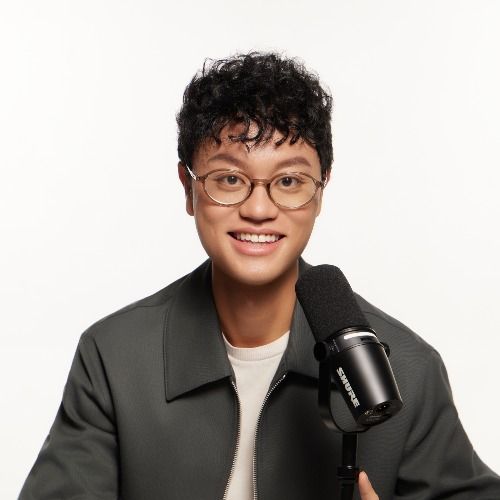
How VacayandCo Is Rethinking Villa Rentals with Wesley Tang | EP8
Episode Overview
Alternative accommodations are no longer just a niche corner of hospitality.
They’re becoming one of the fastest evolving sectors in travel, powered by changing guest behavior, remote work, technology, and the growing demand for more flexible and personalized stays.
In this episode of The Curious Concierge, Justin sits down with Wesley Tang, Founder & CEO of VacayandCo, to explore how alternative lodging across Asia is becoming increasingly tech-enabled, operationally sophisticated, and globally scalable.
From food delivery startups and e-commerce to service apartments and luxury villas, Wesley’s entrepreneurial journey spans multiple industries before eventually leading him into the world of short-term rentals and hospitality technology.
Today, VacayandCo is building toward something much bigger than villa bookings: a curated, real-time booking infrastructure for alternative accommodations across Southeast Asia.
This conversation explores:
• Why Southeast Asia’s villa market remains highly fragmented
• The hidden operational challenges behind short-term rentals
• Why real-time booking still barely exists in the villa industry
• How technology and AI are reshaping alternative lodging
• Why hospitality in Asia often scales through labor instead of automation
• The future of OTAs, direct bookings, and marketplace consolidation
• Why digital nomads are changing Southeast Asia’s real estate landscape
• And what it really takes to build a scalable hospitality startup in Asia
⏱️ Timestamps
(00:33) Introduction
(02:02) Wesley’s entrepreneurial journey from finance to hospitality
(07:02) Food Panda, Chope, and lessons from F&B startups
(11:38) Why Wesley entered alternative accommodations
(14:35) Scaling Koala Beds to 450 rooms in Hong Kong
(17:16) Master leases vs management agreements
(19:13) Hospitality tech, smart locks, and automation in Asia
(20:47) Why Wesley launched VacayandCo
(24:50) Building a real-time villa booking platform
(27:04) Why the villa industry in Asia is still fragmented
(31:07) The tech infrastructure behind VacayandCo
(32:47) The future of OTAs, branding, and villa marketplaces
(33:54) Short-term rentals, investors, and Southeast Asia’s growth
(35:47) Digital nomads and changing travel behavior
(37:44) Startup lessons and entrepreneurship
(39:30) Rapid fire round
(41:13) Why Wesley is bullish on the future of travel
(42:31) Closing remarks
Connect with Vacayandco | Wesley Tang
Connect with The Curious Concierge | Justin Sun
Email: justin@thecuriousconcierge.com
Fourth Space Hospitality: https://fourthspacehospitality.com
If you know a hotelier, villa operator, designer, or founder shaping hospitality in Asia, feel free to reach out or make an introduction.
If you enjoyed this episode, please consider leaving a rating or review — it helps more listeners discover the show.
Transcript
Today's guest is Wesley Tang, founder and CEO of VacayandCo a fast-growing alternative accommodation platform focused on villas and short-term rentals across Asia.
With an international background spanning Canada, the US, Hong Kong, and Southeast Asia, Wesley represents a new generation of hospitality entrepreneurs building outside traditional hotel structures. In less than a year, VacayandCo has onboarded more than 700 properties while also pushing toward real-time booking technology and more structured operations in what has historically been a very fragmented, relationship-driven industry.
In this conversation, we explore what it really takes to scale a villa platform, how tech is reshaping alternative lodging, and where the future of hospitality may be heading as the lines between hotels, service apartments, and short-term rentals continue to blur.
Justin Sun (:Wesley, welcome to the Curious Concierge. I've been really excited for this conversation since I last met you in Bangkok.
Wes (:Yeah, thanks for having me, Justin.
Justin Sun (:Absolutely. So today, I really want to unpack not just your journey, but what the future of alternative lodging might actually look like for you. So let's start with you. I would like to know as a serial entrepreneur, before we kind of go into your background, how do your friends describe you in a couple words? You know, let's say at a happy hour, they're like, hey, Wesley is blank.
Wes (:I think my best man at my wedding probably described it most, which was he described me as a cockroach, which pretty much meant that I never gave up and I would just keep on going and keep on trying new things. Yeah, think they would, my friends would describe me as personable, as someone willing to help others, but as someone also willing to continue to learn and to grow and to adapt with our ever-changing times.
Justin Sun (:I love that, okay. Well, you've built across multiple industries, right? From fashion, E-Com, food delivery, POS systems, junk boats, service apartments, and now villas. So maybe take me through your background and how you ended up being in hospitality.
Wes (:Yeah, sure. So I was born and raised in Vancouver. I grew up there most of my life. I went to school in the States. I majored in math and economics. Side note, I actually wanted to be a theater major, but my dad banned me on doing that. So with a math and econ major, I came out of school and started looking for jobs. My first job was actually as a broker in a securities firm.
that went defunct around the:And for me, think from then on, I kind of made up in my mind that I wanted to be an entrepreneur because I wanted the fate of what happened in my life to come from me. Yeah. So after that, I joined my friend's company. And that's where I kind of really got my start in digital marketing. We did advertising and marketing for, I guess, digital products. So back then it was called lead generation. So we specialized in
capturing data for car insurance companies, for life insurance companies, for reverse mortgages. The biggest one of our clients was Geico. So we would capture all the information, what type of policy they have, what age they were, what data they might potentially have, and we would send that real time to Geico. So that was very interesting experience because that kind of gave me a full scope of how to optimize landing pages, how to do Google Ads. Not all volume is considered the same.
ked the best. This is back in:So the marketing cost would be less than whatever we would sell the leads for. And then that's how we make money. So long term, wasn't an amazing business. It wasn't something that you could really control in
it made a lot of sense for us to continue to shift different verticals. did, even we even got into penny stocks as well. But ultimately, I think after doing that for about a year and a half, two years, it was time to really start my own thing. So actually, yeah, that's where I started my first company.
in fashion rave apparel called Flir LA. I think back then it was like a burgeoning EDM scene. The EDC was just becoming like a really big thing. know, back in the day it was maybe like 10,000 people, but the year that I went to EDC in LA, it was over 200,000 people. So in my mind, I was thinking, who serves clothing for all these people? And that's how Flir LA was born. And it was also a very interesting experience.
learned a lot about you know digital products and how to sell e-commerce and how to scale through Even Hollywood vendors how to how to do manufacturing supply supply chain all that so Yeah, there's a lot of learnings there, but I guess the big takeaway is it's an inventory business is very very difficult So yeah, I think I think a lot of things I'm mentioning is it's step-by-step to like kind of how I came up with the
businesses that got into and what learnings I had to kind of figure out what I think is a good business or a long-term business. Yeah, so after FlirtLA, that grew quite into a decent-sized business. I think we had the number third or number fourth rank on Google for animal hats. And we were like one of the biggest fulfillment centers for Amazon for
for animal hats and for bejeweled bras. So those are our two big selling products. But ultimately, yeah, I was able to sell that at a little bit of a profit.
Justin Sun (:Hahaha
Wes (:I moved back to Hong Kong in 2015 and I was able to join a point of sales company called Bindo that did iPad point of sales. In the US, I think they have like a lot, like Lightspeed was probably a big one back then. But in Hong Kong and in Asia, there wasn't a lot of point of sales that were remote or mobile point of sales. So you could actually take your iPad and
make payments back then the mobile payments is a big thing for like QSRs F&B, food trucks, whatnot. So that was kind of the big movement there. And I was leading sales and marketing. That was a bit different because we would serve B2B customers instead of B2C customers. And serving B2B customers, a lot of customization, a lot of requests, because a lot of times they're like a big ticket item and signing one big chain of
a bunch of different businesses is worth high value. So, you know, the way that you approach that and the way that you kind of do account management and even marketing, it's more about partnerships rather than, you know, running ads, for example. So yeah, that was, that was a very interesting space. Our CEO was very, very camera shy. So I pretty much learned all my PR training and all my, you know, interview training, panel discussions, whatnot from, from that kind of.
year and a half stint at the point of sales company as well. Which is kind of what led me to getting my first job in food delivery as the head of marketing at Food Panda. So Food Panda being one of the premier food delivery apps. yeah, back then food delivery wasn't a big thing pre-COVID.
Everyone thought it was super, super convenient to have food delivery in Asia or even in Hong Kong. This is before even Grab was big, I think. So it was very difficult to do marketing. People would always ask, like, why do we need food delivery? I can go to the Chat-Tan Tang downstairs and just pick up some food. What's really the value add for food delivery? So yeah, but during the time that I was there, it was quite a lot of fun. The number one
customer segment that we dealt with through food delivery was drunk people. a lot of the marketing we did, even though it was omni-channel marketing across like KOLs or Google ads or email campaigns, or even what we called rider or restaurant branding, a lot of the marketing we did was to cater towards when people get drunk the day after, how do we make them order and order more? So there's quite a few epic parties that we threw.
anda, including a thousand or: Justin Sun (:Wow, amazing. I mean, that's the true operator, real insights that we're getting. And clearly Food Panda is food delivery tech, but it's sort of hospitality if we were to kind of umbrella it under service and F&B. So what shaped your entrepreneurial mindset the most coming out of that? I believe Food Panda, and then you worked at Chope, which was also another startup. And then you left after that.
what gave you that confidence to wanting to start your own thing?
Wes (:Yeah, so shortly after Food Panda, I joined Chope and I had another three, almost three years in F&B. know, Chope was a B2B2C company. So we would service software as a service for restaurant table management, but we would also do bookings for consumer facing. So people would go to our app and book tables online. It stemmed out of Singapore, but I was in charge of the markets of Hong Kong and Macau. But
I think the main thing I realized about F&B, about hospitality is it's a lot of fun and there's a lot of competition because it's a lot of fun. So a lot of people want to do F&B The churn rate for F&B, like, because we could actually see the data point, right? We could see how many restaurants were churning every single month from Food Panda from Chope. It's a very, very, very difficult business. I think F&B, and I always tell my friends this.
F&B is the most difficult business to be in. Your margins are razor thin. You have to constantly be innovating. And because it's such a quote unquote sexy business and so many people want to be in it, even if it's just for a pet project or whatnot, it's very, very, difficult to compete. You can only compete at massive scale. So yeah, think for me, it was enough for me and F&B. I think...
You know, I really enjoyed my time in F&B and it was obviously a lot of fun. But one of the big learnings was it's a brutal, brutal business. I guess another big learning I kind of drew away from both those startups were these are startups that had like, know, CHOP, I think had like 40 million in funding. Food Panda, I think I had like 100 million plus in funding. So we're talking about, you know, very, very, very deep pockets to compete at this level.
in the consumer space of F&B. another learning that kind of drew from that was like, how do I build a product where there's a moat or how do I build something where there's a competitive edge or it's just not that easy to get in. So yeah, that kind of led me to the idea of Koala Beds and Koala Beds was
during the time where there was a lot of VC money and lot of interest that kind of shifted from F&B to like real estate tech. you know, there was coworking, there's co-living. Obviously we work with the biggest benefactor of that trend. And then I guess what we were trying to do was something in terms of the standardization of the budget hotel space. So back then, you know, I was trying to catch the trend because
OYO was the largest one. They also raised several hundred million dollars. We had Red Doors, we had Zen Rooms. Zen Rooms was the same company that owned Food Panda. So just kind of made sense to me that we should get in this space or compete in this space. I think specific to what we did, so we did standardization of budget hotel rooms.
But I think one of our edges for Hong Kong was the fact that it was actually very, very difficult to start a budget hotel because of the legislation in Hong Kong. So Hong Kong is very protectionist of landlords, which is why Airbnb is extremely illegal. They'll do raids and whatnot to make sure that you don't do Airbnb. And for you to have like a license to be able to run short term rentals was very, challenging in Hong Kong.
that kind of ticked all the categories for me. Something with a moat, something that there was a defensibility, and something that could use the expertise that I kind of had acquired over the last couple years.
Justin Sun (:See, that's a very founder mindset actually. And especially having worked at different startups prior to launching your own company, I think you found a cool way to protect yourself, right? From all the supply that was coming on in the F&B industry. But that's very cool. I would love to learn a little bit more.
Beds, I would love to unpack more, to add your time there. Maybe share.
with us a little bit more about how you got the first few apartments running and what was something that you realized perhaps that the vacation rentals in Asia were still inefficient? You talked about OYO, you talked about VC-backed companies, especially in this space. Was there glistening hope that you could potentially flip the script and make something?
Wes (:I think in my mind there was either you take the VC route and you raise a lot of money and try to break even five or six years down the line or you start with something that can be profitable or revenue generating from the get-go so I took the second route you know for us like I put in all my own money for for the first property we did for koala beds
It was a 20-room property and we were able to make all our money back in the first six months. So there was a big aha moment for me because if you know brick and mortar businesses, you never make all your money back in six months. Even for restaurants, it's usually two years. You sign a four-year lease and then you break even in two years or at the very, very best, maybe a year and a half. So I thought that I found someone, something that was able to scale.
something that had the sensibility and really thick margins. So yeah, we just went for it. We were able to raise some money. And then we just tried to acquire as many units as possible. So just to be clear, our business model was master lease. So we signed leases from three years to nine years, and we would just operate on top. And anything we would keep post rent and post paying employees was ours to keep. yeah, we were able to scale very quickly.
rooms by: Justin Sun (:Wow.
And that's also very popular in Hong Kong too. Lots of private companies, despite the size, if they're generating a decent amount of revenue, especially in this case, you just grew from zero to 450 in lightning speed, that roadmap is definitely on the table. That's really cool. And so how was becoming a leader in that instance too, because obviously you started off as the designer, project manager, owner, you know,
lawyer in this case, and then you grew to 450, which I'm sure you had to handle like the cleaning side of the business, operations, guest how was that changed for you?
Wes (:Yeah, think it's quite easy to be a leader when things are going well. I'll just say that. When things are scaling and everyone sees the company expanding and everything is going according to plan and you get bigger and bigger and bigger, it's pretty easy to motivate people. It's pretty easy to be a visionary. I think it's the opposite where it becomes very challenging and things kind of slowly start to fall apart.
Justin Sun (:During that time, WeWork was a very big player in the real estate space. Obviously, WeWork then had a caboose with master leases and now you're seeing management agreements and revenue share contracts being way more popular. So at that time,
How were you going about convincing owners to work with you? Did you ever consider a different model?
Wes (:I think everyone would love to be in a management business because your downside is obviously protected and you can share on the upside. But I think the way that it works usually is there's a trade-off point, which is, I just did the 6-7 right there. The trade-off point is if a market is really, really hot, it's virtually impossible to do
a management agreement. It's only when the market is not hot, the management becomes much easier because they're already not doing very well, they're already not generating a lot of revenue. It's like, now you can squeeze yourself in as a value add and be like, well, you're not doing very well yourself. Why don't we do better for you? But when things are going very well and Hong Kong was the number one most traveled place in the world back then, doing 40 something million visitors a year, no one is going to do management because they're like, well, I'll just do it myself then.
Maybe you can increase that much extra for me, but is it worth the trade off when I don't have, you know, deposits when I don't have a guarantee? Like it doesn't make sense for them. So I think in our mind, we always try to go for management and all those 450 units. will say there was a couple of our management. was just so, so few, maybe less than 10%. And the most, mostly the smaller ones, cause he just didn't want to, to, to manage it themselves. Right. So, yeah, I think, I think.
It was always the hope that we could eventually scale and then get to the point where we had bargaining power. Because obviously, that's how the big guys like Hilton or Marriott do it. They're a franchise to franchisee model and they just spread on all the different operators and owners.
Justin Sun (:Yeah, all asset light. So at that time too, how was the tech stack looking like at, in those growing times? Because Asia, I feel like has a different approach to tech. is approaching it, throwing labor instead of creating some automations or tech, improve the efficiencies. How was that process like for you?
Wes (:Correct.
Yeah, so guess one thing that we did quite well was we started with smart locks. So we actually developed like a full loop system where people could do self check-in. It's difficult to do this if you have a very large property, but for the smaller properties, we do a self check-in and then people could just figure it out and go to their own room. So in that respect, technology helped a lot.
We tried to develop a lot of our own direct bookings, but ultimately I think it's very very difficult to compete with, you know, booking.com or Airbnb head-on. So a lot of the bookings that were done through our own website or our own app, it was mainly repeat bookings rather than discovery bookings. honestly like you said, it's very difficult to manage an operations team, a tech team.
not really be that super well funded. And a lot of times you would have to kind of scope out what is the more important thing to do in terms of deploying resources. It's like, do we expand? Do we spend more on tech? Do we get these locks? Do we not get these locks? I think a lot of times, especially in Southeast Asia, maybe not so much in Hong Kong, but in Southeast Asia, you can just over hire.
Tech doesn't play as big of a role, think, sometimes because it's like, okay, we'll just hire one more guy. It's not that expensive, so.
Justin Sun (:Right. But it sounds like you built some automations when it came to smart locks and guest codes and kind of the checking experience, which clearly you're probably on the forefront at that time. so Koala Beds 450 properties sounds like you were doing really well. What made you pivot into VacayCo which was, service or more apartment style homes in Hong Kong to, large villas out in
Thailand such as Phuket, Pattaya, Koh Samui, etc.
Wes (:Yeah, so obviously, COVID happened. Hong Kong got at worst because Hong Kong actually had the Hong Kong protests. I think a lot of people forget that the Hong Kong protests happened for months prior to COVID. So it was a double whammy. If your business wasn't crushed by the protests, it was crushed by COVID. So that was obviously a very, very challenging time. It was very difficult to get out of all those master leases. It was
very stressful to navigate that whole legal system and the whole process of getting rid of all the staff and kind of scaling operations down. definitely aged a couple of years from there. But I think after experiencing everything I went through, it made the most sense for me to do something asset-like. So to your previous question, it was always in my ideas that
I'd be able to run an asset like company and eventually scale it little by little through marketing, through operations, whatnot. So I think they can co-offered that opportunity. Me and my wife, we actually were married in Phuket. That's when I kind of looked at the whole vacation rental space in Thailand because the money that we were charged for our wedding and for our friends to stay nearby the venue was price gouging.
So I kind of looked at this opportunity as like, why is it so expensive and how do I make money out of this? Yeah, so that's a big reason why I started this company with my wife. She's a little bit less hands-on, but she's still involved. But yeah, I think for us, it made a lot of sense for Thailand because we have a little bit of roots there, a little bit of experience there, but...
Justin Sun (:You
Ha
Wes (:Besides Hong Kong, Thailand was the second most traveled place in the world back in 2021. I think now it's first or second too. obviously Thailand is a different market. It has its own set of obstacles, but being in Thailand and experiencing life in Thailand was also one of the reasons why we wanted to do this.
Justin Sun (:Yeah, absolutely. can imagine. So before we go into VacayCo I'm curious, did you ever think VacayCo would have a wedding angle at all, given that it was kind of the spark of this new concept?
Wes (:Yeah, so we actually spoke to a couple of wedding operators and told them that we'd be more than happy to work with you with VacayCo and see what villas we could offer. I think most of them already have relationships that they secured over the years that other companies that they work with. But what I realized about weddings is it's a very, very challenging business because you only get one, well, usually, usually you only get one in a lifetime.
The amount of effort and amount of services that you have to provide and the amount of handholding for a wedding is... I don't know if it's something we want to do. We actually did one wedding last month. So we did help to plan one wedding last month and it was just so much extra work because... and you know, for good reason because it's the bride's day, it's the groom's day, you know, you want it to be perfect but it's not scalable in that respect.
It's still in the back of my mind as a potential vertical that we could do,
Justin Sun (:It is very logistically heavy, but that said, I would love to learn a little bit more about VacayCo. VacayCo.
You know what you've told me has been super interesting to learn. It has gone from zero to 700 properties in less than a year. So why don't you tell us a little bit more? Are you positioning it as an OTA, a property manager, or how would you describe VacayCo
Wes (:Yeah, when I first started, we kind of described VacayCo as a one-stop shop solution for all villa needs. I think since then it's kind of changed a little bit. You know, as with most businesses, you you learn from your experiences and you learn what the moat is. So I think for us to see a one-stop shop is probably not wise because you'll get a lot of interesting requests.
for you to, that maybe you won't be able to handle all the time.
VacayCo is currently what we want to accomplish is be the first real-time booking service for Villa Rentals across Asia, starting with Thailand. I guess our big differentiating point with Airbnb is that we're able to offer real-time bookings with curation.
So Airbnb is a free platform. Anyone can go on, anyone can host, anyone can sign themselves up. For us, we've seen and we've visited and we've done our DD on all the properties that we listed. So you're not going to get some random property that ends up canceling their booking last minute. So yeah, for us, that real time experience, we're building that out. It's becoming way more tech heavy than originally anticipated. But I think in the age of AI, this is where the
where we need to go with this.
Justin Sun (:Yeah, let's double click on real time for a little bit, because I think a lot of people don't understand or don't realize that a lot of properties in Southeast Asia don't rely on Airbnb as a channel. They rely on larger OTAs and we're talking about trip.com, Ctrip, Agoda, booking.com, et cetera. And so in this case, I think you're also building a platform where
you're able to provide a larger scope of properties outside of your Airbnb platform. And that said, it's also really great that you're creating relationships with these folks because a lot of the times, I'm sure, people who are booking villas, having heard these scary stories of it not being real or being booked by someone else and showing up to a different property
obviously has made this a little bit of a taboo industry. So it's great to hear that there's that credibility that you're building into this. That said, what friction are you trying to eliminate today with all of that?
Wes (:Thank you.
Yeah, I think you said it quite well in the STR space there's a lot of fragmentation people use different OTAs I think there's like 40 OTAs that are out there that like big OTAs. There's 40 different people use different property management systems You know, everyone has a different way of doing operations Some are integrated fully into a cleaning service. Some are doing their own cleaning
You know, there's no real standardization amongst everything. So this fragmentation is what we hope to kind of centralize on the VK and co back end system. A lot of what we're doing for our tech stack is building all these different integrations, you know, to different property management systems to the OTAs. So everyone can look at us as like the hub where they manage all their bookings. I think that's ultimately what we have to get towards. If we're able to get towards that, then, you know, that's when we have
true stickiness with the different villas that we work with. Because even when I look at some players that have been around 10, 15 years, a lot of these guys don't even offer real-time booking. I think a lot of people don't know this, if you go to... I won't say who, but if you go to one villa company that's been doing this for maybe 10 years and you go and you try to request, you have to request the booking. You have to wait.
Justin Sun (:Yeah, definitely.
Wes (:5 minutes, 10 minutes, 30 minutes for them to get back to you and they'll send you like 10 different options and then they'll try to force to sale. So there's no real time booking with a lot of these players. And I don't know if I'm the first person, if I'm just crazy or I'm the first person to be like, hey, why isn't this being done? So I think that's where we can create a moat and create a competitive advantage with other people.
Justin Sun (:Yeah, absolutely. And I think having spoken with you prior to this, what made this so unique is that you know how to find these properties that are not tech savvy. And so you're really actually solving the owner's problems when it comes to providing an all all in one platform, and to really provide this real time booking capabilities. And we're not just talking about being able to just book, we're also talking about
distribution, because these properties typically do it so old school that you might be very lucky to have found this property in the first place instead of, knowing that you will see it on a booking.com or Agoda I'm curious to hear your thoughts whether owners are resistant to this transparency.
Wes (:Yeah, I think there's always going to be resistance to change and to new things. But I think one of the advantages we have are, you know, being transparent with them about, you know, what's the benefit for them? You know, are they going to do extra revenue? Is it going to be easier for them to manage? Like, we're slowly getting to the place where owners are actually using our back end system, being like, OK, here are my bookings. Of course, it takes like...
many many times being like, hey, did I get a booking this week? And then we'll tell the owner, okay, you can check yourself. So it takes a lot of reinforcement. But I also think that it's a double-edged sword because in a way the reinforcement makes your product sticky. Like once you get people to use your backend system to check their bookings themselves, to have everything set up with you, unless you're doing a really, really terrible job, they don't want to switch off anymore. They don't want to go to another...
you know, competitor or whatnot. So of course it's not like a winner take all market. I don't think the OTA space is a winner take all market at all, especially not the Villa OTA space. And I think it's only growing year over year. Short-term rentals is only growing year over year and Southeast Asia is only growing year over year. So I think there's a lot of opportunity here. ⁓ I guess the biggest obstacle in terms of like convincing the owner is that what I said earlier, which is
Justin Sun (:Yeah.
Wes (:A lot of times, technology can be replaced by extra labor because labor is so cheap. you know, a lot of times the owner is like, well, I have this cleaning lady or I have this manager who's been helping me for X amount of years. Like, why do I trust you? She's been with me for like 10 years, you know? So I think that's probably one of the most challenging things.
Justin Sun (:Yeah, absolutely. what tech infrastructure do you need to build to make this possible? Is there a feature or something that you're building right now that you're really excited about?
Wes (:Yeah, so I think for us, we're building like our own PMS, but our PMS is kind of similar to CHOPE where it's B2B2C. we know owners will use our PMS to manage their own bookings. It's not necessarily that all their bookings come from our website. It can come from Airbnb or booking.com, but because it also comes from our website and it's completely free and we're not going to charge. I think we're playing around with the model, but we're going to charge like less than 5%.
for direct bookings for us. We hope that there's some stickiness in the product.
Justin Sun (:Great. What advantages do you have over traditional OTAs?
Wes (:Yeah, I think the way that OTAs are built in this AI age is very old school. I think a lot of the tools we have now that previous OTAs or even property management systems didn't have, like automated chat bot. So that's going to be a built-in feature into our website where owners, if they want to use our system to also answer their customer inquiries, they can do that.
Obviously, you know, some of the big guys like Ctrip or I think Ctrip has their own AI chatbot as well. It's, you know, obviously there's competition there, but I think just starting from a tech stack where the infrastructure is a lot newer, so it helped a lot. I also think that we don't technically compete with a Ctrip or booking.com because their bread and butter is hotels.
They do have services for short-term rentals. think Agoda has something called Agoda Homes. for us, we think that there's still room to compete against a subsection of a very large company.
Justin Sun (:Yeah, definitely. And there's so much inventory out there that has been, has yet to be explored, as you mentioned. And so kind of going on this OTA train, OTAs are marketplaces that discourage or, allows the owners to avoid having to think about direct bookings, about branding. What do you think is the future of
the Villa ecosystem. Is it going to be brand led or marketplace led?
Wes (:I think it's 50-50 maybe. That's a good question. That's a good question. I mean, I think from my understanding, a lot of the OTAs are actually trying to do their own brand. So I know that Ctrip is trying to do or has done their own brand in Japan. So we're starting to already see the merge of like marketplace versus branding. I do think there's going to be owners that get consolidated like single unit.
owners that will get consolidated into branding. But I also think there's a lot of space for like real estate funds and pension funds to potentially, know, REITS to potentially do their own brand and to partner with smaller operators to do this. So I think it's pretty, pretty spread out. I would say probably 50-50.
Justin Sun (:And talking about REITs, I think in America or across Europe, we're seeing, as you mentioned, this consolidation, &A through different property management companies, and REITs institutionalizing this short-term rental industry. From your conversations with investors, venture capital, what do you think are the sentiment tied to short-term rentals in Asia specifically?
Wes (:I mean, Asia always lags behind the US for like eight to 10 years. So I think we still have some time. I do have quite a few friends that work in this space in the US. They tell me like most family housing is like owned by big firms now. I think it's like some crazy number, like 60 or 70 % where pretty much a lot of like big private equity firms are coming in and like buying these properties up just to Airbnb them, for example.
I think in Asia, just the way that the market is set up, I don't think it's going to be entirely like that. I think it's difficult to borrow money in Southeast Asia through infrastructure and legislation. It's difficult to have full ownership. So a lot of US companies are not just going to come into Thailand or Vietnam or Indonesia because it's just very difficult to do that. So because of that, I think there's a lot of space to move.
But I do think that there's going to be some consolidation. And I do think that people are going to look at Southeast Asia more and more for income-yielding properties. I think you're already starting to see it. There's a lot of digital nomads going to Bangkok, to Thailand. And I think that wave is only going to increase. a place gets, usually there's a lot of immigration into a place like America.
recent time we've seen reverse immigration. So they're going to places like Thailand because of remote work or because they can or Vietnam. And what are they going to do there? They're going to buy like a short-term rental or resort or whatnot. So yeah, I am quite bullish.
Justin Sun (:Yeah, definitely.
We're seeing a nomads turn into long-term renters, turn into property owners, which then could act both as short-term rentals or their primary or secondary residents, right? Since they're already here and their purpose is to really travel. And so we'll probably see a rise in supply at some point too. Now you worked across Thailand and Hong Kong and some talk about regulations and different industries.
Kind of want to zoom out a little bit and talk about Hong Kong and Thailand's booking psychology. You've operated in both of these markets. You've chatted and met so many of your guests. Thailand is very different than Hong Kong. I'm curious, when you're chatting with these customers that are booking in these locations, what's the difference that you're noticing?
Wes (:Well to be fair most of our customers for VacayCo are actually from Hong Kong. They're just traveling to Thailand. So the difference there is not that big. I think we did that purposefully so that we could kind of focus on a moat. That was the lowest hanging fruit for us like our friends are friends of friends and whatnot. So Hong Kong was definitely one of
It is the biggest market that we're servicing right now. The second biggest being Thailand. But yeah, think to answer your question, there's a lot of cultural differences in terms of work. But in terms of booking, I don't think there's that many differences. I think ultimately, the same marketing tools still apply. Am I on Google Ads? Am I doing an email campaign?
Am I working with KOLs? But within that, I think it's more so about what channels are different rather than what the process is in terms of being different. For example, as you may know, TikTok is banned in Hong Kong, but everybody uses TikTok in Thailand. So TikTok is like the number one social media in Thailand. But for Hong Kong, it's still banned. that's, I guess, one example of the channel difference.
between Hong Kong and Thailand.
Justin Sun (:Given that you are clearly a serial entrepreneur and having grown so many different types of business, what is one lesson from scaling startups that founders typically ignore?
Wes (:I don't think an idea is good enough. I think a lot of times when I was younger, I'd have an idea for something and I would be afraid to share it. The devil is in the details, right? It's all about the execution. And I think a lot of things have to go right for someone to be successful. And there's a lot of luck involved. And as I get older and kind of going full circle to why I wanted to be an entrepreneur was being in control of my own destiny and whatnot.
But as I get older, realize sometimes things, it's really all about luck. All you can do is your best and keep on showing up day in and day out and try to improve and try to grow and try to work on improving aspects of your business. But in the end, so much luck is involved and you have to know that. And you have to be a little bit crazy to want to be an entrepreneur because it's a very, very difficult journey.
Justin Sun (:Definitely. Well, luck doesn't fall off the tree. it does take a lot of hard work. And as you mentioned, it's not just an idea. It's really about the person behind it driving that concept to life. But you've done so much so far. So congratulations on that. if you were to start VacayCo again, what would you do differently?
Wes (:probably focused more on the tech. In the beginning, a lot of our tech was outsourced. was really a very painful process to kind of bring that in-house. And even now, we have a very small tech team. So I think tech obviously is one of the most scalable parts of the business. I think that's, for this specific business, that's the only thing I would do differently. Otherwise, I do feel good about some of the moves that I made.
some of the opportunities that took so overall quite happy
Justin Sun (:Right, well let's move into a fun round. It's called rapid fire. Whatever comes to mind, feel free to share. So the first one is, what is the most underrated villa destination in Thailand?
Wes (:Hua Hin
Justin Sun (:Okay, one hospitality habit you'd eliminate forever.
Wes (:phone calls. A lot of people like to talk on their phone. I don't like to talk on their phone.
Justin Sun (:That's a good one.
And I think honestly, talking about tech, that is one thing I'm very bullish on about voice agents or AI agents when it comes to phone calls and voice messages, because I'm not trying to eliminate a person, but I don't think you need someone to pick up a phone and for you to relay your food orders with. I think that can absolutely be.
a tech thing. So totally agree with you on that. One tech tool every villa owner should adopt.
Wes (:sort of chat bot for customer service. It's actually quite crazy that not everyone's doing this now.
Justin Sun (:Yeah. So, Given your marketing background, lead generation or brand equity? Which one wins in the long run?
Wes (:Ooh, that's a loaded question. think brand equity will always win in long run, but the difficulty it is to get to that brand equity, it just takes so long. I don't know if any business can really survive that.
Justin Sun (:And if VacayCo expands beyond Thailand, where first?
Wes (:Vietnam.
Justin Sun (:Sweet. Okay, well, Wesley, this has been such an insightful look into the realities of building in alternative lodging. What I really take away is that the sector is moving from informal and fragmented toward a more structured tech enabled marketplace. And so before we wrap up, what excites you most about the next chapter for VacayCo?
Wes (:something.
Justin Sun (:Where can listeners follow your journey?
Wes (:Yeah, I think one of the things I always tell my friends, I truly believe in the future of travel. I think travel is the only thing, well not the only thing, but one of the only things that will continue to grow even in this AI revolution. I think you can't ever really fully replace experiences, even if it's virtual reality or whatnot.
as sad as it is to say, like people get displaced and have more time to do things. Like they will only travel more. I think for me, there's no other industry I would rather be in, but travel and tourism. So that's what I'm really excited about. And I'm excited about incorporating all the different AI tools and all the knowledge that I've learned to grow this business to being a lot greater and larger in the future. So.
You can follow us at vacayandco.com or on IG at vacayandco We will be having a TikTok soon. We do have IG and Facebook and LINE, but TikTok is coming next. So yeah, we have different promotions and partnership opportunities that will be coming up in the near future. Also, if you're a big music fan festival, we still have villas available.
for Wonderfruit, EDC, or Tomorrowland. So check us out.
Justin Sun (:Fantastic, Wes, I'll leave those links in the show notes below, but thank you so much for coming on the Curious Concierge. It was a pleasure to have you on.
Wes (:was a pleasure talking to you. Thanks, Justin.
Justin Sun (:Thanks Wes.