Building Section L: Howard Ho on Culture, Apartment Hotels & the Future of Urban Hospitality | EP16
A hotel can be full of people and still feel completely anonymous.
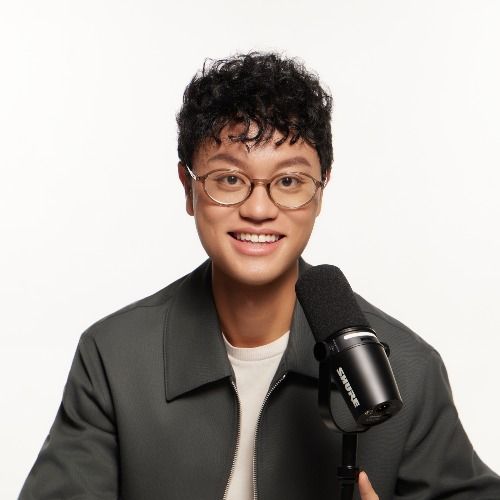
In this episode of The Curious Concierge, Justin Sun sits down with Howard Ho, Co-Founder & CEO of Section L, an independent hospitality company rethinking the apartment hotel experience in Japan.
Howard’s career has taken him through Four Seasons, hotel consulting, asset management and brand development before eventually leaving the corporate path to build his own hospitality company.
Section L combines the practical freedom of an apartment with the service and human connection of a hotel.
And while kitchens, washing machines and additional space remain important parts of the product, Howard believes the company’s real competitive advantage is something much harder to copy: culture.
We discuss what Airbnb changed about both guest expectations and service, why apartment-style amenities increasingly matter even for short stays, and the thinking behind Section L’s philosophy: Hotels Without Strangers.
We also explore how genuine community can be encouraged without forcing interaction, why independent operators may have an opportunity to create more locally rooted urban hotels, how AI could change hotel discovery and booking, and how Howard is thinking about scaling Section L without losing the culture that made it distinctive.
Howard also introduces Vol, a new premium brand that takes Section L’s neighborhood philosophy in a different direction by bringing more local history, stories and character inside the hotel itself.
The bigger question throughout the conversation is simple:
As hotel products become easier to replicate, what actually remains defensible?
For Howard, the answer is the people and culture behind the experience.
Connect with Section L
Connect with The Curious Concierge | Justin Sun
Email: justin@thecuriousconcierge.com
Fourth Space Hospitality: https://fourthspacehospitality.com
If you know a hotelier, operator, designer, founder or entrepreneur shaping hospitality in Asia, feel free to reach out or make an introduction.
If you enjoyed this episode, please leave a rating or review. It helps more listeners discover The Curious Concierge.
Transcript
A hotel
can be full of guests and still feel completely anonymous. My guest today is Howard Ho, co-founder and CEO of Section L, an independent hospitality company rethinking the apartment hotel experience in Tokyo. After working across four seasons, hotel consulting, asset management, and brand development at Shangri-La.
Howard left the corporate path to build a different kind of stay, one that combines the practical freedom of an apartment with the service and human connection of a hotel. Section L calls its philosophy hotels without strangers.
in this conversation, we explore what Airbnb changed about traveler expectations, how genuine community can be created without forcing interaction.
And whether an independent hospitality company can protect its culture and personality as it grows into larger properties and new brands.
Justin (:Howard, it's so great to have you on the Curious Concierge. Thanks so much for spending some time with me today.
Howard (:Hey, great to see you again, Justin. Looking forward to this.
Justin (:Well, I'm glad to have you here and I'm excited for this as well. Well, Howard, your background spans across different types of hospitality industries. we have four seasons, you then consulted, you did some asset management, and then you went back to Shangri-La, right, and did some brand and development work there. And now you're building your own alternative lodging platform in Tokyo. Now looking back.
What's been the most interesting or key highlights of that journey that really led you to Section L?
Howard (:I think there's been a few really important milestones in my career. first, of course, is is going to hotel school where I met a bunch of wonderful people. my first job out of hotel school was with the Four Seasons Resort Aviara in San Diego. And back in 2005, I was in management training with them. And that's really where I got to see how culture.
is spread throughout an organization. I remember having to wake up at three in the morning as a banquet houseman to go clean up after these big elaborate weddings. And there was a there was a a team captain on our team named Bo. He's from Montana and he's probably the hardest working guy I had met up until that point. it was my first time doing
Banquet houseman work, which is very manual. So I always show up with a full head of sweat. And he never judged me before. He always said, Hey, listen, if you've got sweat on your brows, you're you're working hard. the level of detail that he would go to, because I remember cleaning up after one particular wedding where there was rose petals all over the floor in a in a thousand square meter ballroom.
The level of detail, every time he saw a scuff on the ballroom wall, he would report it. He would make sure that every single square inch was covered. And that kind of attitude was consistent throughout the organization. I eventually worked in the accounting part, the project management side, I worked with engineering.
95% of the people that I worked with exhibited that same kind of passion and that kind of care for the job. So that's when I was really impressed. I was like, wow, Four Seasons, this is such an inspiring brand. so after my time with Four Seasons, I had moved on to Asia where I spent time with Horowath, that allowed me to travel around mostly Greater China.
At a time when Greater China was absolutely booming. So that's where I got to see how hotel decisions were made. Back in the day, it was very much real estate driven. And we, as the international experts, were the ones to come in and recommend what brand the developers or owners needed to work with. and then I went to work for Shangri-La. first part of that was in asset management, then I got to see
the process of starting a new brand. And I think in the process of creating Hotel Gen, now known as Gen by Shangri La, I was hooked. I had to kind of scratch that founder's itch and try to do something on my own.
That's what brought me to Japan.
Justin (:most people would have climbed the corporate ladder, but you decided to build a hotel company instead. Is there a reason why you decided to do something on your own?
Howard (:You know, I I've always I've always thought that I would start a business. that could have been the influence of of my parents who who were entrepreneurs in in real estate in in Taiwan. but I always just felt that I I wanted to do something on my own.
When I was at Shangri-La for a long time, I was very enamored by the corporate lifestyle. And I was I was really quite comfortable. But I think being part of a very small team tasked with developing and launching a new brand, I wanted to do it and I wanted to do it with no constraints. I wanted to do it in a way that was completely my own, where I could call the shots.
So that was around the same time as Airbnb really taking off and Japan really taking off. So I saw an opportunity here in Japan. I knew some people that own real estate in central Tokyo. They were already running Airbnbs. So I pitched them the idea of starting a management company and a brand. And that's how I got started with my first business.
Justin (:Well, Japan is a very interesting market because it requires you to be quite knowledgeable with the local language. You spend a decent time in China, working across Southeast Asia. What made you decide to actually start in Japan? I know you mentioned you had some contacts, but was that the core reason? network is very important, but I'm curious why Japan.
Howard (:I think it's the opportunity. I think it's the fact that in 2012 Japan had just crossed 10 million visitors. And by the time that I had decided to go to Japan, it was already sitting at about 23 million, so more than doubled. it was the fact that the Olympics were coming up in 2020 that everybody was super excited about. It was the fact that Airbnb was taking off very dramatically.
You hear all these stories about the leasing arbitrage, about people that were able to lease an apartment, furnish it, flip it, run it as Airbnb, and provide some very special hospitality experiences. And I I think even though I had never worked for Airbnb, it was really one of the big inspirations for me and and for my my co-founders. I think
observing Airbnb from as as somebody from the more traditional part of the industry, it showed me two things. One was that the guest expectation towards product was changing. Because twenty years ago when I was in hotel school, it was all about a hotel has a lobby, has a lobby lounge, has an all day dining restaurant, a ballroom maybe.
But it was no longer the case because guests no longer need a full-service hotel to feel at home. They've found just as much meaning staying in a place that reminded them of somebody else's home. And I think the second change was the guest expectation towards service. So traditional hotel-like service: you walk in, somebody carries your bag, there's somebody standing behind a front desk in a suit, greeting you by your last name.
Airbnb turned it on its head. It allowed regular folks to essentially run hotels in their own neighborhood. So when you show up, the person that's showing you the door, keeping giving you the keys, could be a person that grew up in that neighborhood. And they're super excited you're here. Can't wait to show you where to get the best macchiato and and things like that. So I think
Today we're so used to that that we forget that actually 15, 20 years ago, this would have been a pipe dream. Nobody would have expected something like this at such a scale. So that's part of the reason why I wanted to come here. And of course, who doesn't love Japan? I mean, I I grew up hearing Japanese because I lived in Taipei in the alley where the very first Ding Taifung restaurant was.
And there were a lot of Japanese tourists there. So I grew up listening to Japanese. my my grandma spoke Japanese as well. very strong cultural affinity between Taiwan and and Japan.
Justin (:Wow,
okay. Well, maybe your grandma was a sign, I suppose, that Japan was in your future. Now, before we kind of click into what you mentioned about this mindset shift of customers because of the Airbnb growth or the Airbnb impact that it has, I'm curious, as Section L launched in
2020, basically the worst possible time to start a hotel company, perhaps, you know, or or in general hospitality space. What did those first months really feel like? I know you also touched upon the Olympics coming and you could really prep for that, but was there
Uncertainty? Was there nervousness? I also realize, you know, you're coming in from your other experience, which is in-the-hood hospitality. So you knew the STR market really well. How did those first few months feel like?
Howard (:Yeah, when my co-founders and
, this was towards the end of:on the books. But who knew just around the corner, COVID would happen. so we we really spend those few months from kind of February onwards
just trying to figure out what was happening with the world. at the same time.
We were very lucky that we had our first product, our first project already confirmed that was due to open in July. And we knew that no matter how hard we worked, our growth as a company had a very clear cap on it because nobody was thinking about hospitality at the time. Of course, we tried. We tried to pitch to various investors, we tried to find more
multifamily building owners to say, let us run this what we thought was a very pandemic-proof business model of extended stays, apartment hotels. Let us run this for you and try to increase your yield. But we knew there was a a a limit to how much we could grow. And that allowed us to very comfortably focus on the task at hand, which is we needed to open a hotel. Let's get this thing designed. Let's order the furniture. Let's make sure guests come to stay with us.
there was a lot of nerves, but to be honest, it was like one of the more carefree days I've had at Section L. I remember the first project was a multifamily conversion into apartment hotel. And when that project was delivered as a new building, there was a electric bicycle. As many developers like to leave a small kit, there was an electric bicycle.
in the garage. So I very quickly commandeered that bicycle and I started riding around Tokyo. And it was the first experience I've had of just riding a bicycle through the streets when everybody was asked to stay home. going through rolling through the streets of Ginza at like 10 p.m. after work, it was surreal. It was a surreal experience. I'll never forget it, but I just remember feeling so free because we only had one thing to focus on.
And I think with focus comes freedom, if that makes sense. There were no other distractions.
Justin (:No, I love that.
Howard (:I had to do just one job.
Justin (:That's great. that also gives you a clear North Star to build something while everything around you seems really chaotic. And it gives you that kind of focus. And so building into that, right, where when people first hear an apartment hotel, the immediate assumption is, you know, it's just a bigger hotel room. but listening to you, I feel like that doesn't seem to be the point at all, right?
What problem were you actually trying to solve?
Howard (:It it really took us a while to to articulate this. I think what gave us comfort in the beginning was tracking companies like Extended Stay America, which reported that even in 2020 they were still running 85% occupancies. So we always thought, okay, we need a good mix of kind of long stay and and short stay guests to make this a sustainable business model. And the
The apartment amenities, the washing machine, the kitchen was critical in this product offering. Now, when I think about it, it extended stay hotels is a bit of a misnomer because our average length of stay right now is about four nights. That's not extended stay at all.
What this shows me is that these extended stay amenities are for short stays as well. That people that are coming in for two, three nights want this kind of lifestyle just as much as somebody who were who is moving their life here. So what I think is happening is people no longer want to stay somewhere. They want to be able to continue their lifestyle in a different place.
especially with this recent surge in in wellness and people recognizing their own mortality. the value of keeping your daily habits is only increasing and apartment hotels really allow for that.
Justin (:you're right. there is a travel behavior that we're seeing that traditional hotels aren't able to fully serve, which could also extend to working, right? Having spaces for desks. Traditionally, hotels in Japan are
Very known for their compact rooms and very efficient layouts. And you quite often, I guess, transactional stays, but you're really providing those elements of like laundry, living room, dining tables, and places to actually spend time with not only your friends but family. When it comes to deciding different elements of your offerings and amenities, how intentional.
were these decisions. I know every building has different features. How do you come up with that?
Howard (:We like to standardize across the different locations in terms of the physical amenities. So a guest being able to make their own breakfast by day two or three because they're tired of eating noodles or eating rice. That happens. that's not uncommon.
a guest that that needs to do their laundry. We had a we had a regional CEO of a very large Singaporean real estate company come stay with us for nine days at the hotel that I'm sitting in right now, actually. so I had a chance to meet him and I said, what what brings you here? And he says, I'm playing golf. I'm here for nine days. You guys have a washing machine.
Very very simplified answer, but the fact is we're offering we're offering convenience and and thereby we're offering value.
Justin (:What about the willingness to pay? When guests get more space, more autonomy, more neighborhood connection? What has been those insights for you? You know that your guest typically stays for four days. Your rooms are obviously a little bit more than a typical compact room out there in Tokyo.
What are some of your guests inside how do you perceive your guests and what do they share with you in terms of your demographic, your audience?
Howard (:I think what really matters to them beyond the physical amenities is actually the the service culture that they feel at the hotel. This is what drives our reviews and this is what keeps people coming back the eighth time, the ninth time, what keeps people trying different section L properties across town. I I think the feedback is
quite consistent in that our staff really made people feel feel welcome.
And that's something that I I always think that good design, functionality, those are not necessarily moats. I think those are important. I think we need to be very thoughtful about it, but really the only moat you have is your culture when it comes to a hospitality business.
Justin (:Well, I think that's a really great segue because the phrase hotels without strangers. I think that's one of a very strong piece of hospitality branding that I've seen in in many years. That is a tagline for Section L Where did that come from? I agree. I think you guys are offering beyond the typical concierge. You're really acting as a friend, providing that comfort and
ease
as someone who is traveling into Japan, whether it's their first time in or whether it's their 20th time, right? It's always nice to feel that you have someone on the grounds looking after you. Where did that come from?
Howard (:I wish there was some big eureka moment, but to be honest, it just it just kind of came during a meeting where we were trying to figure out somewhat of a rallying cry that we could share with our team. And Hotels Without Strangers just felt like a very natural encapsulation of what we're about. the ethos of wanting our guests to interact with not just us, but also with each other.
the driving force behind these weekly happy hours that we do, whereby every day of the week there's a happy hour happening at at one of the properties. just last week I was at Happy Hour here and there were two separate groups of guests that that bonded over the the Japanese whiskey that that we were providing and ended up sharing their travel plans. so stories like this I think really give a lot of credence to to what we're about. I think
When you when you stay at a hotel, it does become very transactional and and impersonal. when we had a a new senior leader join us about a year ago, she one of the first pieces of feedback that she gave was she felt that our staff was very friendly.
And when we were doing positioning workshops for the Section L brand, that word kept coming up. And I thought, friendly, but that's I mean, obvious, right? We have to be friendly. But what she was getting at was the fact that when you're in hospitality and you have the kind of service where your eyes match your smile, it just hits different. People are not going through a choreography.
People are expressing to you how they genuinely feel about you being here. So I think hotels without strangers really captures the essence of of how our team shows warmth and and hospitality to our guests. I think it's also a product of us having 26 different nationalities across 86 team members.
Most of us, myself included, are foreign residents in Tokyo. So we've all had that experience of showing up on your first day in a new city. We've all had that experience of being intimidated by the by the ticket vending machine when you go to your first ramen shop and you can't read hiragana. We've all had that experience of feeling a little bit out of place. So we carry a lot of empathy when it comes to
Handling our guests.
Justin (:I think empathy is a really great word here, but I would love to challenge you a little bit more, push you and ask how do you encourage those interactions, right? Without making them feel awkward or forced, as you mentioned, choreograph. I think service choreography is a very overused term in hospitality nowadays, but how do you
Do that internally. what's your programming looking like when it comes to building a culture for your employees?
Howard (:Our operations
managers are very strict when it comes to interviewing. I think compared to many local hotel chains, we're probably a bit more lenient on Japanese standard. For example, we don't need to have the very formal style of speaking Japanese. But
that personality really needs to come through. and something I learned at Hotel Jen was you can have that personality.
And you can let it roam free, but you need to provide some guardrails nonetheless.
Justin (:And I think from what I'm gathering too, you have a good mix of long-ish.
stay guests mixing with short stay travelers and you are providing a very friendly product but it's also kind of baked into the DNA and the branding how do you see community like at Section L as part of your actual product offering?
Howard (:I think what I've realized over the last few years is that community can't be forced. So when we talk about community, in order to let things happen organically, we have to show our commitment.
For example, when I first came to Japan, one of the ideas I had for Airbnbs was that we could go to all these local vendors and tell them, hey, we're gonna send guests your way. Can you give them a discount? We tried it once or twice, but now looking back for obvious reasons that didn't work. Because why should I give you a discount? Right? I have a good product here.
So now when we do what's what we call city gems, which are our favorite 15 spots around the neighborhood, we actually go to them with an offering. We say, Hey, we're new to the neighborhood, we'd love to feature you and recommend you to our guests. we go back twice, first time to eat there, get to know the owner, second time to take professional photographs that we'll print out into nice postcards that we give to them as gifts and we use to recommend them to our guests.
And just so it turns out that some of these restaurants actually turn around to us and say, hey, next time you have any guests, or next time any of your team members want to come eat with us, 10% off automatically. So community can't really be forced. another way that we want this community ethos to spread more organically is we we need to treat our staff the same way that we want them to treat.
guests. So when we talk about hotels without strangers, we're not only talking about the guests, we're also talking about the way that we treat our staff. That means we really want to get to know them. We want to understand their professional strengths, their professional opportunities. We want to understand
Their potential growth path. We want to outline that growth path for them. Our largest contingent is operations associates. And about two years ago, we launched a development program whereby when you join as an associate, in the next year, you'll have the opportunity to apply to become a supervisor. But it doesn't happen automatically. You have to go through a three-month operations development program.
Where we teach you all the new skills and responsibilities of a supervisor. And if you pass the test, as I said, our operations managers are district. If you pass the test, then you get to be a supervisor. And from there you get to be assistant manager and then manager, senior manager, director, and so on. So I think we've for a relatively young company, we've outlined a pretty clear career path for our team members. recently at our HQ level.
We've had team members that we've brought on board from operations into a revenue management role, for example, where they're really thriving. We've provided some extra extra training for them as well. did 300 hours on on eCornell, the revenue management 360 program. so really when we talk about hotels without strangers, it has to start with us, the management team.
Justin (:That's great to hear. building community within starting
with your internal staff is key. And that really gets them to stay with Section L and grow with Section L. that then also contributes to the overarching goal of having a familiar face when someone returns a year later, two years later.
I do love how Section L really puts this neighborhood guide, the City Gems initiative. I think curating these recommendations is really great.
I've seen them and they never really feel like a generic concierge list. but I'm curious to hear your take is, you know, after building properties across Tokyo, what have the neighborhoods themselves taught you about hospitality?
Howard (:Hmm, that's a good question. One thing that I really respect about Japan, and this could be a positive or negative, depends on how you look at it.
I think Japanese restaurateurs, craftsmen, they're so dedicated to their craft that they understand the limits of their own abilities. So if that limit means I need to make every single dish that comes out of this kitchen, since I'm only one person, I can only make 200 a day. So I'm only gonna make 200 a day, even if there's demand for 400.
So foregoing economic opportunities just to be able to continue to polish their craft, I think that's something that Japan has taught me about hospitality and and about service. And that's something that that I think is
Obviously, as a relatively young company, we have a clear mandate to grow the business. But as we're growing the business, we need to remind ourselves how we can do so without sacrificing quality and now.
Justin (:Well said. And I do feel that's very strong in Japan. That craftsmanship, the heritage tradition.
do you think the future of city hotels is becoming less about famous addresses or you know, popular specific regions and districts and more about telling authentic neighborhood stories? Do you see that shift happening in in Tokyo or in Japan in general?
Howard (:The big shift in the past five to ten years in the way that big brands operate is that they don't want to manage hotels anymore. They want to provide the brand for other people to manage hotels. So they've shifted from hospitality really into brand and marketing.
So that gives a very important opportunity, I think, to independent operators like us who pride ourselves on authenticity to really step into that void. I think the future of urban hotels, I would love to see more locally rooted, community-driven concepts because more and more I think that's what that's what people travel for, right?
You can stay at X big brand anywhere in the world. And don't get me wrong, I have a lot of respect for big brands because of the consistency that they build worldwide. but I also think that that guests want more meaning in their stay, right? It's no longer about just convenience or it's no longer about
Standards are important, but you always want to leave room for a little bit of spontaneity.
Justin (:Definitely. finish the sentence for me? A section
Howard (:Yeah.
Justin (:L stay should feel like blank.
Howard (:I think a Section L stay should feel like visiting your college buddy in a new city that they've just moved to. You haven't seen them in many years since graduation, but the familiarity is still there. You're happy to see that they're living in a nice place, that they've clearly put some thought into designing. But
What they're most excited about is to show you their neighborhood and to show off a little bit how much they know that neighborhood. So after staying with them, you really get a sense of what it's like for them to to live in this new city.
Justin (:Love that. A stranger no longer becomes a stranger. That said,
I think we've talked about authenticity, we've talked about this feeling of connection. But technology, you know, has made travel incredibly efficient. I'm not convinced it's made travel feel more human. But, there's always, this careful balance between the two. and you guys have built technology that helps your guests with intersection, which
is an interesting concept because it's isn't it's not a hotel software, it's a social layer for guests. So where did that idea come from? Was it resolving an operational issue or was it something that you wanted to build as part of community building?
Howard (:So that was always part of the aspiration is to create something that really drives community. And back in 2020, when we started the business, we definitely aspired to use technology to bring people together. And we found the first use case of that in our check-in software. Because it was COVID, everything needed to be contactless.
We scoured the market for a local solution that could help our guests check in. And we couldn't find anything that really fit in terms of functionality, in terms of customizability for our brand in a way that shows off our personality. So we decided to build our own. So that was the first module that we built that was which was a check-in module.
And on top of that, we started to build the core intersection module, which is where the guest experience actually lives. So that's where you get to see our house manuals, our city gems, events that are happening in the neighborhood. And back then it was also a way for you to communicate with the front desk and potentially with other guests as well. And going forward, I think our
I think our stance on technology has changed in that it's very clear that companies like us don't need to build everything ourselves. With the speed at which technology is evolving because of AI, I think there are better uses of our time. So nowadays, our product team is more engaged with
Building our tech stack, so aggregating the right technologies and making sure they they talk to each other. For example, we recently built out Japan's first web app provisioning for Asaabloy for a digital key. So that's actually through intersection, guests at our hotels could use a digital wallet key. Before that in Japan, there was only an native app provisioned digital key. So we are kind of first of our kind.
Justin (:that's so cool.
that is proprietary to you guys. And obviously, you know, having seen a lot of s hotel softwares out there, that's actually a really huge feat.
you have to change quite a bit in terms of, the chips in the door locks or updating your PMS, you know, a bunch of integrations that require to get the opportunity scan with your digital wallet. So kudos to you and your team. if you're if your team isn't using AI today,
there's a lot of missed opportunities. that said, where do you think AI generally creates value for you and your team when it comes to building section L?
Howard (:Think that answer would have been different only th three, four months ago. but now we're in a process of onboarding our our leadership team onto Claude so that we can start using cowork. I mean, our product team is already using Claude Code. I think most of the code these days is not not written by humans.
For cowork, I mean that is a a force multiplier just in terms of of productivity. I think eventually where we want to get to on the guest experience side is completely do away with any sort of like web inquiry form, any sort of email. guests should be able to interact directly using voice on our website if they wanted to ask questions.
Recently I had a discussion with somebody that works in hotel tech, one of the larger kind of tech conglomerates. And we were discussing a future where user interface becomes obsolete.
There's no more need for user interface. Because travelers will only speak to their agents, and their agents will do the rest of the work. So, in a world like that, how pretty does your booking engine need to look? That I'm not sure. But that is one potential solution. if that is the case.
I think it's I think it's great. I think it makes it easier for the customer. I think it's one less avenue for the operator and the brand to show off what they're all about. But at the end of the day, it's it's about convenience for the customer, especially during the discovery and booking process.
Justin (:Yeah, well, that's a hot take because we're skipping the whole process of the search and discovery, and now we're really relying on just the results from an agent. do you think Section L will one day be a part of that story?
how do you think you're gonna bridge that gap if it's all voice native and pre-suggested queries that AI is showcasing to potential customers?
Howard (:I think that becomes an option and that option is not going to be used for every travel occasion. And luckily in the travel business, we have the opportunity to market to occasions, not to people, because the same person behaves differently for different occasions. So if I were traveling for business, for example, I'm probably more likely going to use voice because I need the convenience. I just need to have a room book for those particular dates at a certain price.
But if I'm traveling with my family, actually the discovery process becomes quite fun. You get to look at nice pictures, you get to read about new destinations, you get to learn about things that kids can do for five hours at a time.
I recently took my my four-year-old to Yokohama, which is not that much of a trip from Tokyo, but we spent hours inside the Nissan headquarters gallery, which is essentially a showroom with 20 new car models. we were able to spend hours there because he was just running from car to car.
And pretending to drive, opening the trunk, opening the doors, pushing buttons. I never would have known about that if I hadn't read reviews, if I hadn't read somebody's blog about a Nissan showroom. So I think the discovery process is is still very important. and I I obviously I I think voice can can also aid in that process too. But in terms of the way that
Brands like us can continue to speak to customers.
We're never gonna stop making the the content that that we're currently making. We're never gonna stop trying to get our our customers' attention. I think our customers are one that really does value the discovery process because of the occasion that that they're traveling for. But we need to have options.
Justin (:Right. And on the line of discovery, let's talk about the discovery of new properties. Like what's in the pipeline for you guys? How have you been managing your assets across Tokyo? And what does that look like in the next two to three years?
Howard (:I think we're at a very exciting inflection point right now because up until today, we've onboarded new properties either through a conversion of existing multifamily buildings, we've repositioned existing apartment hotels. The hotel that I'm sitting in right now used to be one of those traditional business hotels with 10, 12 square meter rooms.
So we gutted the entire building, combined rooms. We actually decreased the room count by about half, which in today's world might be a little bit counterintuitive. But we wanted to build a product that had longevity, and we also wanted to build a product that could 4X the room rate. So up until today, that's what we've been doing. But as of probably like a year ago, we started working on
New development projects. So currently we have two that are under construction and another four that will start construction within the next ten months. that takes us from Tokyo only to kind of the first steps in our
National strategy. So we'll be in cities like Kumamoto, we'll be in cities like Kyoto. that takes us from only the Section L brand to a new premium apartment hotel offering that has much more on-site. So if you think of Section L as your friendly neighborhood apartment hotel where we're mostly rooms only and we try to get you out into the neighborhood, this new brand.
Is all about bringing elements of the neighborhood's stories, its history, its unsung heroes into the design of the hotel, expressed in common areas like a cocktail bar and cafe and some limited co-working space as well. So a much more immersive take on our style of hospitality. And we're going to be debuting this in
Tokyo and we're gonna have a a project in Kyoto as well. So
Justin (:Wow, congratulations.
That's so exciting. Are you also
Howard (:Thank you. Thank you.
Justin (:moving from asset light to perhaps getting more on the ownership side with these constructions?
Howard (:What we've started doing about two years ago is we we started looking at co-investing in projects. And we like to have that option to show that as an operator we our interests are are pretty aligned. I see us doing more of that. So with the with the balance sheet that we have, I think we can put in meaningful enough stakes in let's say
up to three different meaningful size projects.
Justin (:You guys have some amazing stuff in the pipeline, but it sounds like you might have a new brand too. Are you thinking of putting this under the Section L brand or creating a whole new sister brand?
Howard (:So this would be a new brand, this would be a premium brand. And the way to think about this new brand is if Section L was your friendly neighborhood apartment hotel where you really try to push the guests out into the neighborhood to explore. The new brand called Vol is all about bringing elements of the neighborhood's history, its stories, and its unsung heroes into the design of the hotel in a way that's much more immersive.
It's called Vol, spelled V-O-L, and it's short for volume. And by volume we mean a collection of stories. So these are stories that are for the neighborhood, from the neighborhood. our first project that will start construction in October is gonna be in the Asakusa neighborhood of Tokyo.
And our second one, which is in the Gion neighborhood of Kyoto, is gonna break ground in February of next year.
in addition to the rooms, we've got a cocktail bar, we've got a cafe, and some co-working space in both our new properties as a way to kind of forge that that community togetherness.
Justin (:That's exciting. So the biggest difference, from the business side is actually offering F&B potentially and having more staff on site. How do you foresee yourself
Howard (:Yes.
Justin (:growing into that space?
are there any existing properties that have F&B offerings or provide, additional services to get you guys ready for these new properties?
Howard (:currently we don't have any F&B services other than having a small wine selection as some of our properties that that people can can purchase. For us, we always approach F&B with a bit of caution and we always try to think about it more strategically because coming from a hotel background, we understand what.
F&B does to the economics of a hotel as much as as much as we we love F&B for the new brand Vol, I think it's very important to have that cocktail bar experience. It's important to have that morning cafe and potentially breakfast experience because all of that helps to support a stronger brand positioning and and stronger pricing power, obviously.
Going forward, would we necessarily rule out F&B in Section L hotels? Not necessarily. I think the way that we present Section L to the world is also changing. Our current average inventory size is anywhere from 25 to 45 rooms. But in the development projects, that escalates to 50 to 90 rooms.
And eventually we see ourselves going beyond that to let's say 120 or so rooms. So the accompanying facilities will all be different. I can tell you for sure, to our previous note about how people want to continue their lifestyles while they're on the road, all of our new Section L developments will have a gym. And that
Justin (:Amazing. what would you say makes a building or neighborhood an automatic fit for section L? And what makes a deal wrong from the beginning?
Howard (:I think the building needs to be of a certain size. we it would be harder for us to look at projects that are under, let's say, 30 or 40 keys because of the growth aspirations we have and the the truth that smaller hotels are harder to run than larger hotels.
So we really want to go for individual scale at this point. I think in as far as neighborhoods go, we would love it if the neighborhood was somewhat known by tourists, but we also would love to be in other kind of more understated neighborhoods in in Tokyo. I think places like Sanganjaya, places like Shimokitazawa, I think those are all very interesting options for Section L. What you'll find with our existing property is is that
We're typically not on the main street in any neighborhood. We're always one or two streets back. And we're very proud of that fact because you you kind of have to discover us. so we we we like that about our current locations.
Justin (:That's always part of the exploration, right? And the adventure. What you know, you section L has been around for quite some time, and you guys have been in this industry for a good solid amount of time as well. You've seen the industry grow quite a bit. You've also mentioned Airbnb itself has opened people's perspective and mindset to this type of lodging. But what are the biggest
Howard (:Mm-hmm.
Justin (:mistakes?
Let's call it mistakes landlords or developers make when they think about apartment hotels or even section L in Japan.
Howard (:So I believe that many of the apartment hotels or even hotels in general were built at a time when it's raining gold outside, all you need to do is step out with a bucket. So the market was so good that anyone could do well. And in a growth market, obviously, hey, jump at the opportunity. But longer term,
Demand starts to stabilize. And as much as we hate to say this, I think Japan was such a huge attraction, especially post-COVID. So the bounce back was so forceful when people started to travel again. I think we're past that peak. I think we're past peak revenge tourism. These days, people have been back to Tokyo several times already.
They kind of know their way around. They can probably even speak the language a little bit. So it's not as daunting to them as it was before. So it's becoming more competitive. So we start to see new hotels in the apartment hotel sector starting to offer more, whether it be a on-site bathhouse, whether it be private saunas, gyms, I think are starting to become more common as well.
So I would say on a larger scale, what I've seen here in Japan is just the commoditization of a of Airbnbs of of apartment hotels. So people kind of building the same product over and over again. But I think that's not sustainable for the obvious reason that everything the music is is bound to stop at some point.
Justin (:Well, you've proven this concept. The business is growing, the brand is recognizable and I want to finish by looking forward. Imagine we're sitting here again in 2030. what would need to happen over the next
Five years for you to look back and generally say we changed hospitality.
What role do
Howard (:Mm.
Justin (:you hope Section L plays in Japan's hospitality story over the next five years,
Howard (:Mm.
If I just do the process of elimination and I think about all the different parts of a hotel, I think one where we can make the biggest impact, again, it comes back to our service culture. I think that to me is what made Four Seasons what it is today. Is the fact that the staff are so aligned with the brand.
And everyone's facing the same direction.
I also think that we are part of a wave that's just that Asia is just experiencing in in apartment hotels. So the same way that it has swept across Europe and the US, this way of traveling, this continuing your lifestyle while you're on the road, that's starting to sweep through Asia as well. And we w we're just happy to to be a part of that. I don't think we necessarily
need to change anything too drastically about hospitality because at the end of the day, this is the same business as it was a hundred years ago. It's gonna be the same business in a hundred years, no matter how much technology ravages existing standards and ways of doing things. I think it's always going to be a people business. So we're just happy to be a part of that.
Justin (:Well, I'm certain you guys are gonna make an impact. And it's very different in terms of providing hospitality through the lens of international folks, I suppose, who are also embedded in your local culture.
And I think that will bring about something really unique that other traditional Japanese hotels will will never cross. I think Japan's language barriers and traditions are very well kept. And this seems like a really cool way to break that ice, to break the mold.
we're kind of towards the end of our conversation here. So I'm gonna ask you five questions and you just have to answer with something that comes to mind. Okay, ready? Here we go. The first question is: what is the most underrated Tokyo neighborhood?
Howard (:Hamamatscho, I gotta give flowers to my neighborhood. best
Justin (:Okay.
Howard (:udon, best noodles, literally right across from where I live.
Justin (:Perfect. Favorite hotel outside of Japan.
Howard (:the former hotel de la Pay in Phnom Penh, which is now
Park Hyatt
Justin (:What is one hospitality trend you'd happily eliminate forever?
Howard (:Okay, but everyone has to stop doing this at the same time. These little
Justin (:Yeah.
Howard (:triangles that we fold into toilet paper, we need to stop doing that. It adds no value. But everyone needs to do it at the same time. We could say October 1st, but everyone needs to make that commitment.
Justin (:You heard it here first, folks. We gotta stop folding the napkins. I've seen some housekeepers where they dap it into the faucet and it seeps into like a couple of layers. What's the point, right?
Howard (:Exactly. Everyone's
thinking the same thing. Nobody wants to be the The first to stop.
Justin (:What is one Japanese word that best describes section L?
Howard (:Arigato gozai much. It's a hybrid word that we we started using at the office recently. It's
Justin (:And that means
Howard (:that means arigato gozaimus is is thank you very much, but we say arigato gozai much because we're multicultural and we're grateful.
Justin (:Very much. what
is one city gem every visitor should experience?
Howard (:Homaru Unagi, which is about one block from where I'm sitting now. It's probably the crispiest eel rice I've ever had. It's absolutely delicious.
Justin (:Can't wait to try it. And now last question is if Section L could be anywhere outside of Japan, where would it be?
Howard (:I'd love to take Section L to my hometown of Taipei.
Justin (:it'll be a great addition to Taiwan. Well, Howard, I've really enjoyed this conversation. I think one thing that stood out to me
while we've talked, is that it feels like you're actually building something much bigger, you know, you're building neighborhoods, you're building connections, you're building places where strangers leave feeling like locals. And so I'll leave you with one final question.
When someone checks out of a sectional property, what do you hope they're taking home with them besides memories of Tokyo?
Howard (:Hopefully the intention to come back again. You know, I'm I'm honestly very grateful for the guests that we have. We have this one Slack channel at our company that's dedicated to all the gifts that are given to us by guests. And having been in the hotel business for 20 years, I I never I've never seen something like that before. But literally, we will have a returning guest that stayed with us 11 times.
Go to the shrine to get us a kumade, which is like one of the those good luck bear claws to bring us good luck. Or they would carry Danish chocolates, macadamia nuts, all these different things. Trader Joe's bags. Our team's gotten a lot of those. Trader Joe's bags, they're in very high demand here in Japan.
Our guests are super gracious and I have to think that part of it is because our team has been has been so wonderful and so hospitable to them.
Justin (:that means something when the guests are actively thinking about your staff and giving them gifts. as we wrap up, is there anything that you're looking forward to? And is there anywhere that folks can follow along your journey, whether it's LinkedIn, on your socials, where's the best place to find you?
Howard (:I think find me on LinkedIn. Send me a DM. we'd love to talk to anyone that wants to find out more about Section L. We're we're on the gram as well. so please follow us at Stay Section L.
Justin (:Great.
I'll link those details in the show notes below, but Howard, thank you so much for joining me today. And for everyone listening, if you've enjoyed this conversation, make sure to check out Section L the next time you're in Japan.
And as always, if you've enjoyed this episode, please subscribe, leave us a review and share it with someone who loves thoughtful hospitality as much as we do. And so until next time, I'm Justin and this has been The Curious Concierge. And thanks so much, Howard, for being on with me.
Howard (:Thanks, Justin.